
Red Ginseng vs White Ginseng is not just a color comparison. It is a processing comparison. Both usually come from Panax ginseng root, but red ginseng is typically made by steaming and drying the root, while white ginseng is usually dried without steaming. That difference matters because it changes how the ingredient is categorized, labeled, stored, and understood by buyers.
The word “red” can sound like marketing, but in ginseng it usually points to a preparation method. The root is not simply painted, flavored, or renamed. It goes through a heat-processing step that distinguishes red ginseng from white ginseng. Secrets Of The Tribe treats this as processing literacy: when a buyer understands preparation, they can read labels more carefully and avoid assuming that all ginseng products are the same.
This article does not provide medical advice. Ginseng supplements are not intended to diagnose, treat, cure, or prevent fatigue, infections, blood sugar problems, cognitive issues, immune disorders, or any disease. If you are pregnant or breastfeeding, under 18, taking medication, managing diabetes, blood pressure concerns, sleep problems, bleeding disorders, heart conditions, autoimmune conditions, or chronic health issues, ask a qualified healthcare professional before using ginseng.
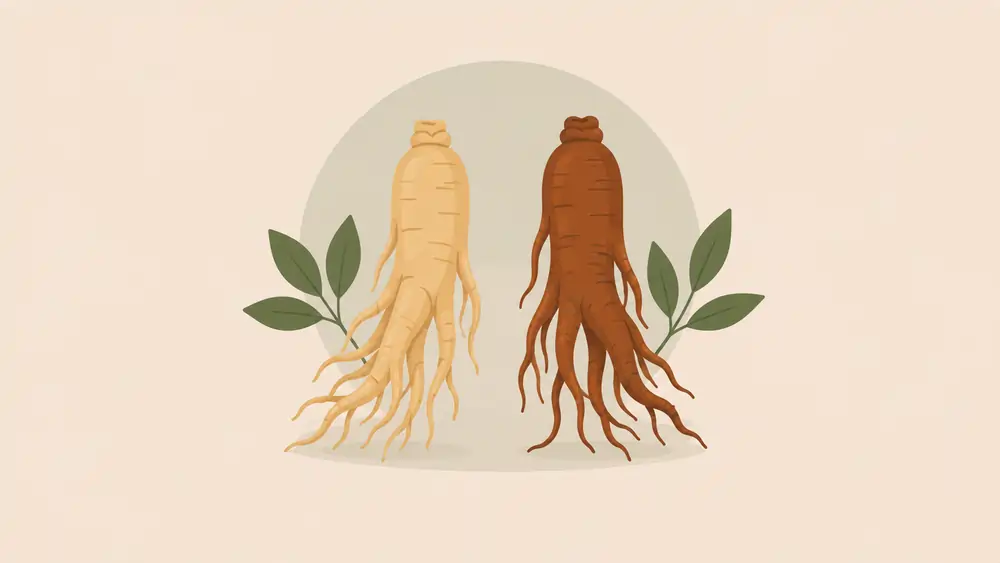
The main difference is processing. Red ginseng is steamed and then dried. White ginseng is usually dried without steaming.
Both can come from the same species, commonly Panax ginseng. The processing step changes the product category. That is why two labels can both say “ginseng” but refer to different prepared forms.
For buyers, this means “red” and “white” are not just visual descriptions. They are preparation terms.
| Feature | Red Ginseng | White Ginseng |
|---|---|---|
| Main process | Steamed and dried | Dried without steaming |
| Common source | Panax ginseng root | Panax ginseng root |
| Processing category | Heat-processed form | Non-steamed dried form |
| Common label terms | Korean red ginseng, red Panax ginseng, red ginseng extract | White ginseng, dried ginseng root, white Panax ginseng |
| Buyer focus | Steaming, drying, extract type, ginsenoside marker | Drying method, root quality, plant identity, serving size |
It is called red ginseng because the steaming and drying process changes the root’s appearance and processing identity. The color may become darker, reddish-brown, amber, or deeper than the pale dried root associated with white ginseng.
The term “red” usually points to a traditional preparation category. It does not mean the product contains red dye. It also does not mean the ingredient is a different plant species by default.
When you see “red ginseng” on a label, check whether the product also identifies Panax ginseng, plant part, extract type, and serving size.
White ginseng is usually ginseng root that has been dried without the steaming process used for red ginseng. It may be peeled or dried in a way that creates a lighter appearance.
The word “white” can make people think it is a milder species or a separate herb, but it usually refers to a preparation style of Panax ginseng root.
White ginseng may appear as slices, powder, capsules, tea material, or extract. As with red ginseng, the label details matter.
Yes, steaming is a meaningful processing step. Heat and drying can change the physical characteristics of the root and influence the profile of ginseng compounds, including ginsenosides and related transformation products.
This does not mean every red ginseng product is automatically better than every white ginseng product. Processing is one factor. Product quality also depends on species identity, root age, sourcing, extraction method, standardization, testing, storage, and serving directions.
Do not reduce the comparison to “red is stronger” or “white is weaker.” That is too simple.
Ginsenosides are plant compounds commonly used as marker compounds for Panax ginseng. They often appear on labels as a percentage or standardized content.
A label may say “standardized to ginsenosides.” That means the product is made to contain a target level of those marker compounds.
Ginsenosides are useful for label comparison, but they do not tell the full story. The form, serving size, extract ratio, plant part, and preparation method still matter.
Not always, but the phrase often appears in that context. Korean red ginseng typically refers to Panax ginseng cultivated and processed in Korea using the red ginseng preparation style.
However, a label should not rely on “Korean” or “red” alone. It should identify the botanical name, plant part, serving size, and form.
“Korean red ginseng” sounds specific, but careful buyers still check the Supplement Facts panel.
Not automatically. “Better” depends on what you mean: processing tradition, taste, format, extract type, label transparency, serving preference, or buyer expectations.
Red ginseng is more processed because it is steamed and dried. White ginseng is usually dried without steaming. That difference may matter for people comparing product identity, but it does not create a universal ranking.
A high-quality white ginseng product with a clear label can be easier to understand than a vague red ginseng blend with hidden amounts.
The first question should be “What exactly is on the label?” A buyer should know the species, plant part, preparation, extract type, serving size, and whether the product is single-ingredient or blended.
“Better” is often a marketing shortcut. It can hide the details that matter most when comparing supplements.
Secrets Of The Tribe takes a cautious editorial stance here: processing terms are useful, but they should not replace label transparency.
Look for Panax ginseng, Korean red ginseng, red ginseng root, red ginseng extract, root powder, extract ratio, ginsenoside content, serving size, and suggested use.
Also check whether the product is a capsule, tincture, tea, powder, syrup, drink, extract, or blend. A red ginseng energy drink is different from a single-herb red ginseng capsule.
Scan for caffeine, guarana, green tea extract, matcha, yerba mate, added sugars, or stimulant-style blends if the product is marketed around vitality or energy.
Look for Panax ginseng, white ginseng, dried ginseng root, root powder, extract, ginsenoside content, serving size, and preparation details.
White ginseng labels may be less dramatic than red ginseng labels, but they still need careful reading. Confirm whether it is a single-herb product or part of a blend.
Also check storage guidance and expiration date. Dried root products and extracts should still be handled as quality-sensitive supplement ingredients.
| Label Term | Plain Meaning | Why It Matters |
|---|---|---|
| Panax ginseng | Botanical species commonly linked with Asian ginseng | Confirms plant identity better than “ginseng” alone |
| Red ginseng | Steamed and dried preparation | Shows processing category |
| White ginseng | Dried without steaming | Shows non-steamed preparation category |
| Root | Plant part used | Important for botanical accuracy |
| Extract | Prepared ingredient made from plant material | May differ from raw powder or tea slices |
| Standardized | Made to contain a target marker level | Often refers to ginsenoside content |
| Ginsenosides | Marker compounds in Panax ginseng | Useful but not the only quality detail |
Processing tells you whether the product is red or white ginseng, but it does not prove quality on its own. A strong label should still provide clear identity and responsible manufacturing information.
Buyers should look for batch quality, ingredient clarity, third-party testing when available, contamination screening, expiration dating, and clear serving instructions.
The phrase “red ginseng” can be meaningful, but it is not enough by itself.
Some products combine red ginseng or white ginseng with other ingredients. These may include caffeine, mushrooms, adaptogens, vitamins, minerals, amino acids, honey, herbs, or proprietary blends.
That makes comparison harder. You are no longer comparing red ginseng vs white ginseng. You are comparing formulas.
If a blend hides amounts inside a proprietary blend, the ginseng content may be difficult to judge.
Taste can differ, but it also depends on form and preparation. Red ginseng may taste earthy, bitter, roasted, sweet-bitter, or warming. White ginseng may taste lighter, earthy, bitter, or root-like.
Tea slices, powders, capsules, tinctures, syrups, and extracts can all feel different. Capsules may reduce taste. Teas and tinctures make taste more noticeable.
Do not judge identity by taste alone. Use the label.
Ginseng products deserve extra caution for people who are pregnant or breastfeeding, under 18, taking medications, sensitive to stimulating products, managing diabetes, blood pressure concerns, bleeding disorders, sleep problems, heart conditions, autoimmune conditions, or upcoming surgery.
Ginseng may interact with some medications or may not fit every health situation.
Ask a qualified healthcare professional before using red or white ginseng if any medical concern applies.
Use this checklist before buying red ginseng, white ginseng, Korean red ginseng, Panax ginseng extract, ginseng tea, ginseng powder, or a ginseng blend. The goal is to compare processing and label details instead of relying on color words alone.
Look for Panax ginseng on the label. The word “ginseng” alone can be too broad.
Red ginseng usually means steamed and dried. White ginseng usually means dried without steaming.
Look for root, root powder, root extract, or root slices. Plant part matters for botanical clarity.
Capsules, tea, tinctures, powders, syrups, and extracts are different routine experiences.
Ginsenoside content can help compare some products, but it should not be the only factor.
Scan for caffeine, guarana, mushrooms, adaptogens, vitamins, minerals, sugars, or proprietary blends.
Compare one serving from each product, not bottle size or marketing claims.
Check medication cautions, pregnancy and breastfeeding warnings, age guidance, and health-condition notes.
Do not assume red is always better than white or white is always gentler. Compare the actual product.
Red ginseng usually refers to processing, not necessarily a different plant species.
White ginseng is usually dried. It is not the same as fresh root.
Processing terms are useful, but serving size and ingredient details matter too.
A ginseng blend may contain many other ingredients that change the routine.
Steaming and drying define product category; they do not create disease-treatment claims.
Red ginseng is usually steamed and dried, while white ginseng is usually dried without steaming.
Not usually. Both often come from Panax ginseng root, but they are processed differently.
The steaming and drying process darkens the root and creates the red ginseng preparation category.
No. White ginseng is usually dried ginseng root that has not been steamed.
Not automatically. It depends on processing, quality, form, serving size, testing, and buyer needs.
Yes. Steaming and drying can change physical characteristics and compound profile, including ginsenoside-related changes.
Look for Panax ginseng, plant part, red or white processing term, extract type, ginsenoside content, serving size, and warnings.
Plain red ginseng is not caffeine, but blends or drinks may include caffeine sources such as green tea extract, guarana, or coffee extract.
People with medication use, pregnancy, breastfeeding, diabetes, blood pressure concerns, bleeding disorders, sleep issues, heart conditions, or chronic illness should seek professional guidance.
Panax ginseng root that is typically steamed and dried.
Panax ginseng root that is typically dried without steaming.
The botanical species commonly associated with Asian or Korean ginseng supplements.
A red ginseng preparation commonly associated with Panax ginseng cultivated and processed in Korea.
A heat-processing step used to make red ginseng.
A processing step that reduces moisture and helps create shelf-stable ginseng material.
Marker compounds associated with Panax ginseng.
A prepared ingredient made from plant material using a processing method.
An extract made to contain a specified level of a marker compound, such as ginsenosides.
The label panel that lists serving size and dietary ingredients in a supplement.
Red Ginseng vs White Ginseng is mainly a processing difference: red ginseng is steamed and dried, while white ginseng is dried without steaming. Use those terms as a starting point, then compare botanical name, plant part, extract type, serving size, blends, and warnings before choosing a product.
Asian ginseng overview explaining that red ginseng and white ginseng are Asian ginseng prepared in different ways, National Center for Complementary and Integrative Health — nccih.nih.gov/health/asian-ginseng
Korean red ginseng characterization explaining that fresh ginseng is processed into red ginseng through steaming and drying, and white ginseng through drying, National Institutes of Health / PubMed Central — pmc.ncbi.nlm.nih.gov/articles/PMC4593794
Ginseng professional monograph noting Panax ginseng forms and ginsenosides as active ingredients in Asian ginseng, MSD Manual Professional Version — msdmanuals.com/professional/special-subjects/dietary-supplements/ginseng
Research discussion of red ginseng and white ginseng processing, including steaming and air-drying context, National Institutes of Health / PubMed Central — pmc.ncbi.nlm.nih.gov/articles/PMC2657361
Study discussing how steaming and drying can affect ginsenoside variation in ginseng processing, National Institutes of Health / PubMed Central — pmc.ncbi.nlm.nih.gov/articles/PMC7338709
Dietary supplement consumer guidance and label-reading basics, U.S. Food and Drug Administration — fda.gov/food/information-consumers-using-dietary-supplements/questions-and-answers-dietary-supplements
Structure/function claims and required dietary supplement disclaimer language, U.S. Food and Drug Administration — fda.gov/food/nutrition-food-labeling-and-critical-foods/structurefunction-claims
Supplement Facts label and serving-size guidance for dietary supplements, U.S. Food and Drug Administration — fda.gov/food/dietary-supplements-guidance-documents-regulatory-information/dietary-supplement-labeling-guide-chapter-iv-nutrition-labeling

